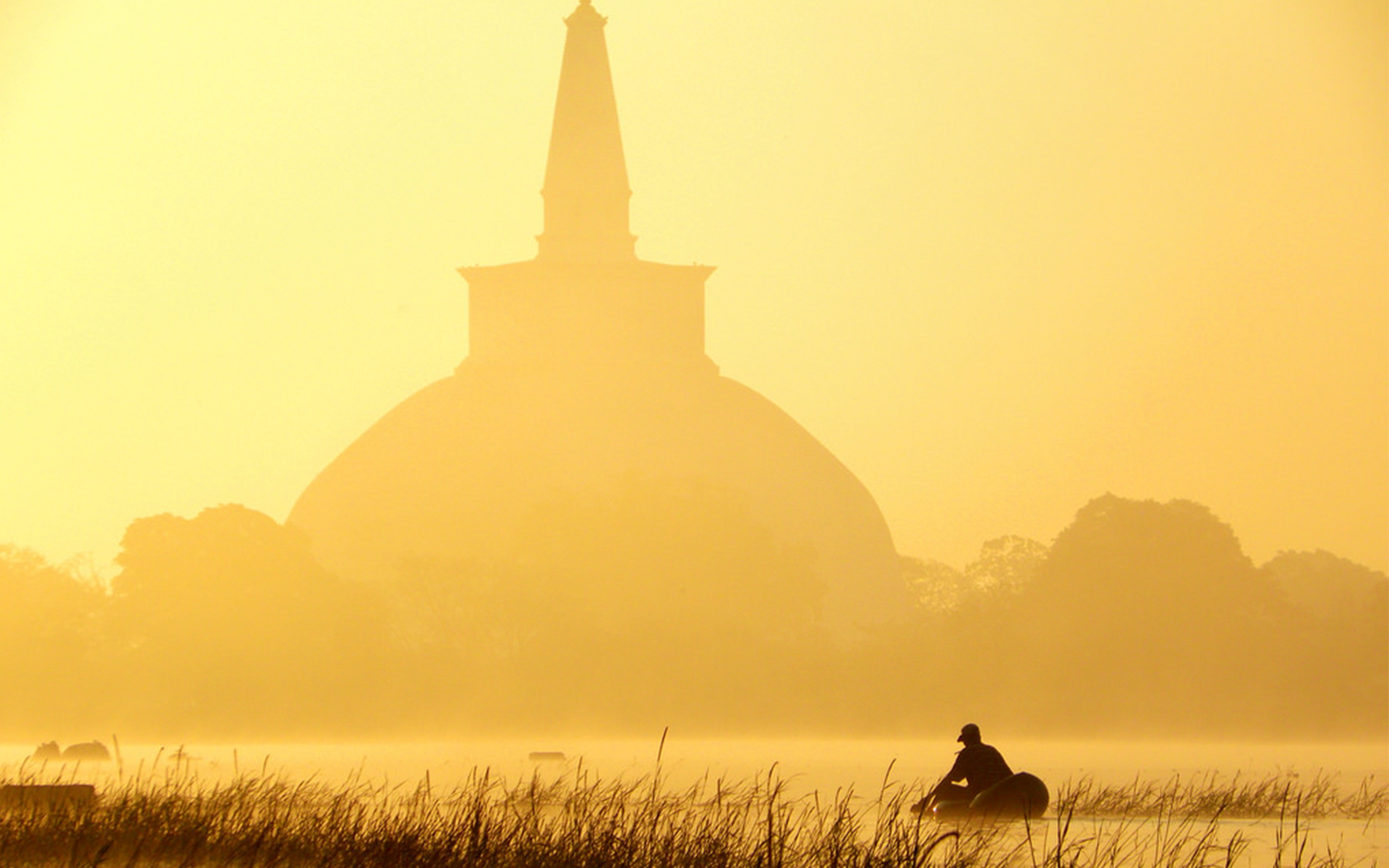
Anuradhapura Ancient City

The historic city of Anuradhapura is an essential stop on any tour of Sri Lanka. This city, located around 205 kms north of Colombo, is one of eight World Heritage Sites in Sri Lanka and is one of the oldest continuously inhabited cities in the world.
Anuradhapura currently serves as the capital city of the North Central Province, and is considered the cradle of Buddhism in Sri Lanka. Its vast network of ancient Buddhist temples, monasteries and places of worship which cover over 40 sq kms has made it a sacred site to Buddhists around the world.
Located on the banks of a river, Anuradhapura is now a picturesque ruined city, filled with mystery and steeped in a rich Buddhist culture. Tour groups and pilgrims alike visit this city, and this diverse and versatile city caters to a locals and visitors alike. The ancient city lies adjacent to the modern, and ruined buildings, ancient temples, cobbled streets, and even crumbling fort walls are spread out and interspersed with all signs of modern life in this bustling and thriving city.
Thuparama
Thuparama is the first dagoba to be built in Anuradhapura during the reign of King Devanmpiyatissa (3rd century BC) enshrining the right collarbone of the Buddha, His alms bowl and other relics. The original dagoba, which was much smaller in size, was renovated and rebuilt several times and the last restoration had been in 1862 in it its present form. The concentric rows of stone columns around the dagoba had at one time held a wooden roof in position over it.
Ruvanveli Dagoba
Ruvanveli Dagoba built by King Dutugemunu who ruled the country in the 2nd century BC is a huge dagoba measuring 103 metres in height with a circumference of 287 metres. The dagoba was in a state of disrepair when discovered in the early 20th century and was restored in its present form according to earlier dimensions.
Jetavana Dagoba
Jetavana dagoba is an enormous brick structure standing in the centre of a large monastic complex, built in the 3rd century AD by King Mahasena. The dagoba stands on a square platform measuring 3.2 hectares in extent and is rated as the largest and tallest brick built monument in the world. In its original form it would have been 120 metres high, shorter than only two Pyramids of Egypt. It has been declared a World Heritage Site. The super structure of the dagoba is currently being restored under the UNESCO Cultural Project.
Abhayagiri Dagoba
This colossal dagoba is the centrepiece of a monastic complex founded by King Valagamba in the 1st century BC that subsequently developed into an international institution attracting scholars from many countries. The Chinese monk Fa-hien came here in the 5th century in search of Buddhist manuscripts and spent two years. In its original form the dagoba was 115 metres high but now it is only 75 metres high with a circumference of 667 metres. It was at the Abhayagiri complex that the sacred Tooth Relic of the Buddha brought to Sri Lanka was first housed.
Sri Maha Bodhi
The right branch of the Bodhi tree (Ficus religiosa) in Buddha Gaya in India under which the Buddha attained enlightenment was brought to Sri Lanka in the 3rd century BC by Arahat Theri Sanghamitta, the daughter of Emperor Asoka. It was planted in Anuradhapura and is venerated to this day by the Buddhists from many countries of the world. This is the oldest recorded tree in the world of which the exact age is known.
The Brazen Palace
The Loha Pasada or the Brazen Palace was founded in the 2nd century BC as a chapter house. In its original glory it had been nine stories high with a roof of copper tiles, hence the name Brazen Palace. The original building was destroyed by fire and was rebuilt and renovated several times by different kings. What now remains is a mass of 1,600 stone pillars standing close to each other.
Isurumuniya
This picturesque rock temple dates back to the 3rd century BC. The beautiful stone sculptures seen at the temple are considered the most beautiful works of art in Anuradhapura. The Isurumuniya Lovers, bathing elephants in bas-relief, man seated in relaxed form are yet unidentified but beautiful to look at. A small dagoba on top of the rock and a pond at the base add beauty to the place.
Samadhi Buddha
“Samadhi” means in deep meditation. This serene image of the Buddha in the meditation posture is the work of an anonymous master-sculptor of the Anuradhapura period who has breathed life into a solid rock. The former Indian Prime Minister Jawaharlal Nehru was so enthralled by this image that he is said to have kept a photograph of the statue in his prison cell from which he drew inspiration while serving a prison sentence during the British Raj.
Mihintale
Thirteen kilometers from Anuradhapura is Mihintale, the site of introduction of Buddhism to Sri Lanka in the year 247 BC. The King of Sri Lanka having embraced Buddhism established the world’s first fauna and flora sanctuary at Mihintale in the 3rd century BC. Monasteries, an ancient hospital, dagobas, ponds, caves in which Buddhist monks lived are among the many places of interest that the visitor should see.
Awkana
The huge granite statue of the Buddha at Awkana, 51 km. southeast of Anuradhapura, hewn out of solid rock in the standing posture on a lotus pedestal is the work of an unknown sculptor during the reign of King Dhatusena in the 5th century AD. It stands 12 metres tall and remains undamaged sans probably the plastering that would have covered the statue. The flawless unbroken pleats of the robe, the perfectly erect posture and the indentation at the waist bear testimony to the skills of the sculptor who executed this masterpiece of rock carving.
Other Ruins in Anuradhapura
Kuttam Pokuna: Kuttam Pokuna or the Twin Ponds are two breathtakingly beautiful bathing ponds aligned lengthwise exemplifying the artistic achievements in the field of hydraulic engineering in ancient Sri Lanka. These date back to around 8 – 10th centuries AD.
Elephant Pond: The Elephant Pond so named because of its gigantic size is equal in area to six modern Olympic swimming pools joined together. The pond may have been built to store water for the large congregation of Buddhist monks at the monastic complex of Abhayagiri.
Vessagiri: Remains of Vessagiri monastery founded during the rein of King Devanampiyatissa (3rd century BC) are seen near the Isurumuni temple. It is an interesting example of landscaped architecture with natural caves converted into residential quarters for Buddhist monks.
Guard Stone: Guard stones are vertical stone slabs with the figure of a celestial being carved in semi relief erected at the entrance to religious buildings. The best example of a Guard Stone is seen at the Abhayagiri complex.
Moon Stone: Moonstones are half-moon shaped stone slabs with beautiful stone carvings of animals and creepers in semi-circular rows placed at the bottom of the flight of steps leading to an image house. It is seen at its best once again at the Abhayagiri complex.
Tissa Wewa: A large man made irrigation tank built in the 3rd century BC by King Devanampiyatissa covering an area of 210 hectares and fed from another giant tank at Kalawewa 90 km. away via a channel.