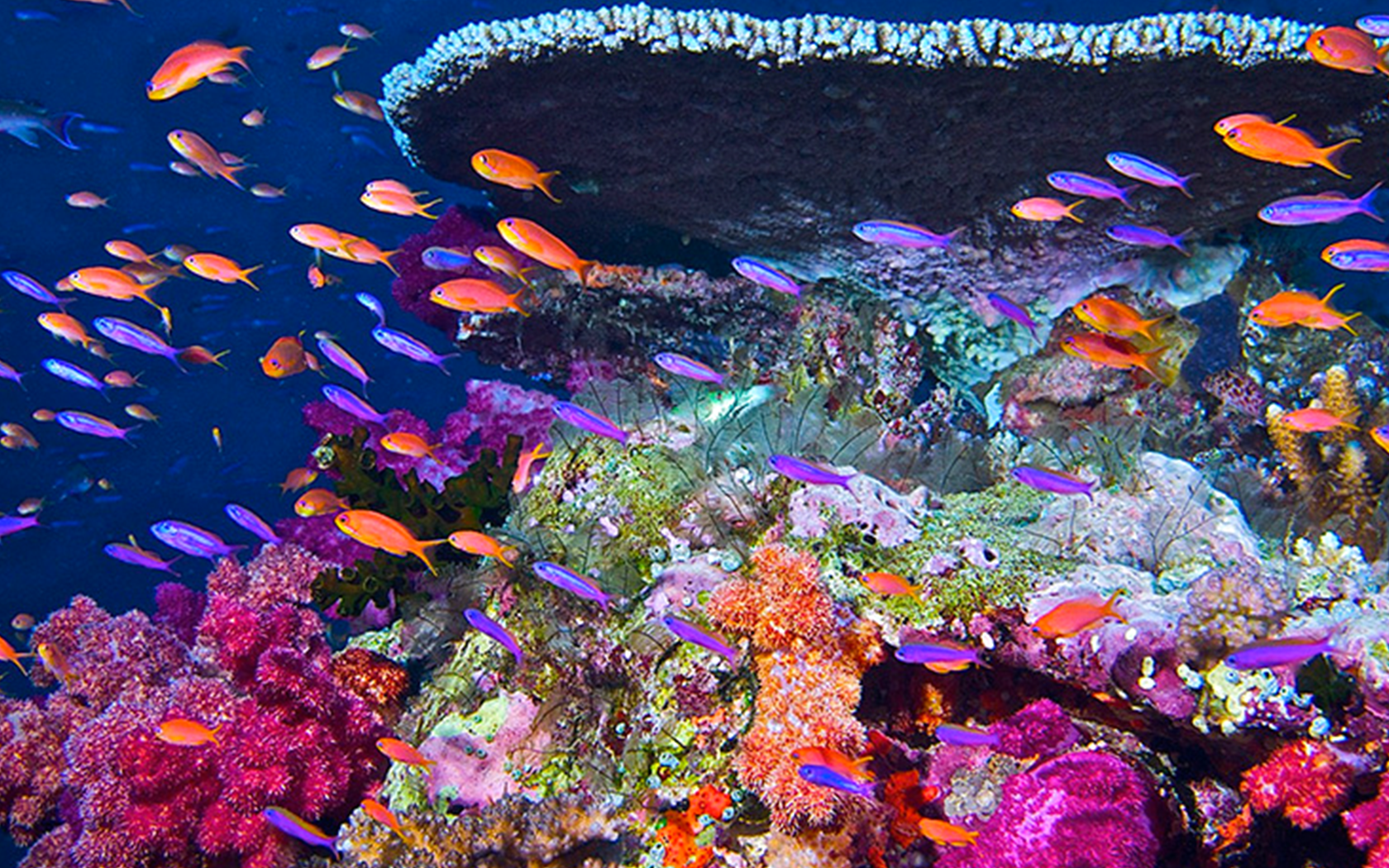
Hikkaduwa Coral Reef

The Hikkaduwa National Park consists of a network of fringing reefs around the southern area of the island, specifically near the city of Hikkaduwa. Coral Reefs plays and important role in protecting the beach. Because Hikkaduwa is close to Colombo and also because the reefs are closer to the roads, it is frequently visited by tourists and locals who love nature.
One of the easiest ways to explore the coral reef is by going on a glass bottom boat. This is the preferred option of many who visit here because you can clearly see the corals and you don’t have to prepare for anything and you don’t have to get wet as well.
The best times to visit the reef would be when the water is clear. Snorkeling and scuba tours are the most common excursions here while one can also charter glass-bottomed boats. Yet tourists must be responsible enough to respect the reef and its inhabitants.
For one, collecting live animals is not encouraged and neither is walking on the corals. While their skeletons are composed of hard limestone they are still living organisms and are still fragile. Being a fringing reef, the Hikkaduwa Reef lessens the effect of coastal erosion by acting as a blockade. The coast extends for just four kilometers outwards. In terms of size, it covers about 102 hectares. Among the corals that grow here, there are elkhorn, table, staghorn and brain corals, all of them being hard coral species which form the very foundations of the reef. Altogether over sixty species make up the reef and these corals provide a home for many other organisms. Some are encrusting organisms like tunicates and marine sponges and all of these stationary invertebrates are filter feeders, straining in microscopic plankton through their body cavities.
Corals however have tentacled polyps for this purpose. Other, more active creatures include tiny, colorful crabs, shrimp, octopuses and starfish, often with interesting interrelationships among both one another and the corals themselves. Many are small enough to live inside the spaces in the corals’ limestone skeletons. There are 170 species of reef fish here. Many ornamental saltwater aquarium species like sea goldies, damselfish, butterflyfish, angelfish and species of wrasse make their home among the corals. Gobies, dragonets, eels and blennies hide under the sand in generally coral-free areas while others live in cracks and crevices within the coral skeletons. Some of the larger fish include the rather dragon-like moray eels of which there are several species, and the ubiquitous blacktip reef shark. It is undoubtedly the apex predator of the shallow reefs. These sharks, at about five to six feet at maximum, are generally harmless but may bite if provoked or due to curiosity on hearing slashing noises. They are less likely to go for submerged swimmers in deeper water. So far no blacktip attacks have resulted in a fatality, although it is still important to give these animals a wide berth. Younger individuals range into shallow lagoon environs while the larger adults hunt in seagrass beds and on the deep outer slopes of the reef.
Another group of animals to watch out for are the many species of lionfish that hunt among the corals. Though small, their spiny fins carry deadly poisons and they advertise this toxin via an elaborate threat display.
Sea grasses are vital coastal environs for many pelagic animals. They are often breeding grounds for some of the bigger, faster commercial fish such as tuna and trevally. Even larger reef predators like groupers and snappers breed in the shallows. Their young live around the sea grass, the only flowering plant to grow in a marine environment and unrelated to conventional seaweed like kelp and wrack. Some of them move into the mangroves but many hunt smaller animals among the grass stalks. Turtles are also largely pelagic but break into the sea grass beds to graze. Three species visit these waters, namely the hawksbill, Olive Ridley and the nearly cosmopolitan green turtles.